
This is the question we hear more than almost any other. When you get dental implants, you’re investing in your smile, and you want to know it’ll hold up. A dental implant can last a lifetime. But that word “can” does a lot of work in that sentence.
Some implants fail within a few years, while others function for 40 years or more. The difference comes down to a handful of factors we can actually control. Dr. Jake Fisher at Fisher Dental in Omaha has placed implants for over a decade. His training at the Dawson Academy and his hospital-based residency at the University of Nebraska Medical Center shaped his approach to complex cases. Dr. Fisher is here to help your implants last and teach you how to care for your restoration at home.
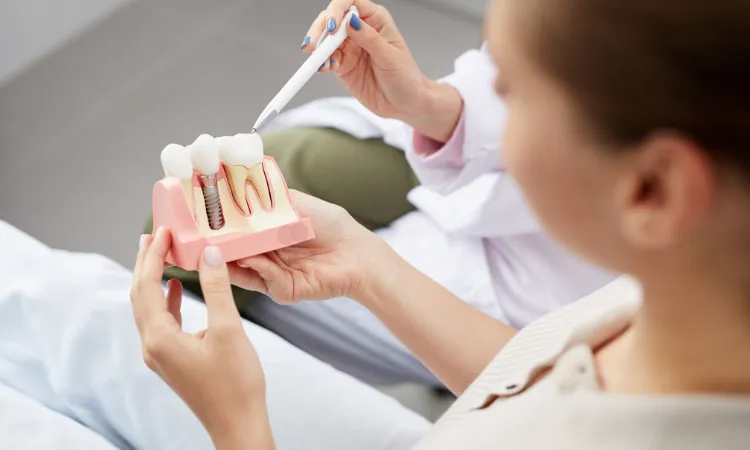
Factor One: The Quality of the Placement
An implant is a precise medical device. Where it goes, how deep it sits, and what angle it enters all determine whether it succeeds. Get those details wrong, and the implant never fully bonds with the bone. When an implant fails, you’re back to square one.
That’s why Dr. Fisher plans every implant carefully before anyone picks up a tool. He studies your bone structure, your bite, and your gum tissue. He’ll use digital imaging to map exactly where the implant should go.
Dr. Fisher’s Dawson Academy training means he evaluates your whole mouth before recommending treatment. He looks at how your teeth, gums, jaw joints, and muscles work together. An implant placed without considering the rest of your bite can fail even if the surgery itself goes perfectly.
Factor Two: Your Bone Health
When you lose a tooth, the bone underneath it starts to shrink. That’s because the root is no longer stimulating the bone. Without that stimulation, the body reabsorbs it.
If you’ve been missing a tooth for years, you may not have enough bone left to support an implant. That’s not a dead end. It just means you might need a bone graft first.
Dr. Fisher will tell you straight whether your bone is ready. If it isn’t, we’ll build it up before we place anything. His hospital-based residency at the University of Nebraska Medical Center gave him experience with complex medical cases. He understands how to manage patients with bone loss, diabetes, and other conditions that affect healing.
Factor Three: Your Daily Habits
Once the implant is in and the final restoration is on, the ball is largely in your court.
Oral Hygiene
Implants don’t get cavities, but the tissue around them can get infected. That condition is called peri-implantitis, and it’s the leading cause of late implant failure.
Brushing, flossing, and regular cleanings keep it at bay. At Fisher Dental, we use Guided Biofilm Therapy to clean around implants gently and thoroughly. This advanced cleaning protocol uses warm water, air, and fine powder to remove bacteria without harsh scraping.
Grinding
If you clench or grind your teeth at night, you’re putting enormous force on your implant. Natural teeth have a cushioning ligament that absorbs some of that pressure. Implants don’t.
That’s why we often recommend a nightguard for grinders. A custom guard absorbs the force so your implant doesn’t take the damage.
Smoking
Smoking restricts blood flow and compromises the tissue around the implant. If you smoke, quitting is the single best thing you can do for implant longevity.
Dr. Fisher will discuss these habits with you honestly. He won’t lecture. He’ll explain what’s at stake and help you make choices that protect your investment.
Factor Four: The Crown on Top
The implant itself is only half the equation. The dental crown on top takes the wear and tear.
Cheap materials chip, crack, or wear down. They can also throw off your bite, which puts uneven pressure on the implant underneath. That’s why we use high-quality materials matched to your specific needs.
A good crown protects the implant. A bad one undermines it.
What Maintenance Actually Looks Like
You don’t need special treatment for implants. But you do need consistency.
- Brush twice a day with fluoride toothpaste
- Floss or use a water flosser around the implant
- Come in for regular cleanings
That’s the same advice we give every patient. The difference is that implants have no natural defense against infection. Your vigilance is the defense.
During your cleanings, we’ll check the implant, measure the surrounding tissue, and catch problems early. We use digital X-rays to see what’s happening below the surface. Early detection means simpler treatment.
Restore Your Bite Today
A dental implant can last a lifetime. But “can” becomes “will” when three things line up: a precise placement, healthy bone, and consistent care from you.
If you’ve been told you’re not a candidate, or if your implant is giving you trouble, come see us. We’ll look at the whole picture and tell you the truth about what’s possible. Call Fisher Dental at 402-526-5091 or request an appointment online. Let’s build something that lasts.